

 Danish

Updated: 21 august 2026
Published: 22 August 2022
Ermeto DIN fittings for hydraulic applications
Ermeto (EO) DIN metric tube fittings are a proven technology for leak-free connections in hydraulic systems. Here you get a complete, practical guide to selection, assembly and troubleshooting – plus quick links to buy DIN metric fittings and valves.
What are Ermeto DIN fittings?
Ermeto is a metric cutting-ring solution for connecting tubes and components in hydraulic systems. The system is known for:
- Leak-free performance and long service life
- High corrosion resistance (e.g. Tough Shield Plus)
- Wide availability of variants and sizes
- Compliance with DIN 2353 and ISO 8434-1
A brief history
The cutting-ring principle was patented in the 1930s and has been developed further ever since. The EO-2 series was launched in 1991 and is today among the most widely used worldwide within transport, mobile hydraulics and agriculture.
Benefits of Ermeto in hydraulics
- Leak-free and vibration-proof connection
- Simple, fast assembly – reduces time and costs. Easy disassembly/reassembly; damaged seals can be replaced.
- High pressure resistance in the appropriate series (LL/L/S). The L series is typically used for light/medium pressure, the S series for higher pressure.
Applications
- Mobile machinery and construction equipment
- Agricultural equipment
- Stationary hydraulic systems and production equipment
- Transport and process applications
Types, materials and series
- Series: LL/L/S (LL for very light, L for light/medium, S for high pressures)
- Materials: carbon steel (often with a zinc-nickel finish) and stainless steel for corrosive environments
- Shapes: straight, elbow, tees, crosses, nuts, sleeves and more
- Sealing: classic cutting ring (EO) or integrated elastomer seal (EO-2)
Standards and compatibility
- Complies with DIN 2353 and ISO 8434-1
- Compatibility is ensured by choosing the correct series (LLL/S/), matching tube diameter, thread and standard
Assembling the EO-2 fitting series: step by step
- Preparation: Deburr and clean the tube end. Check the tube cut and roundness.
- Pre-assembly: Position the nut and cutting ring correctly on the tube.
- Insertion: Push the tube into the fitting body until it bottoms out.
- Tightening: Tighten according to the manufacturer's instructions (torque/angle). Avoid over- or under-tightening.
- Inspection: Visually inspect the bite of the cutting ring and the seal. Pressure test if possible.
Tip: Watch the official EO-2 assembly video for the correct technique below:
Common faults and troubleshooting
- Leakage after assembly: Check tube deburring, that the tube has bottomed out correctly in the body, and that the cutting ring has bitten properly. Check the tightening.
- Damaged seals: Replace the elastomer seal and check for dirt and scratched seats.
- Repeated assembly errors: Use EO-2 with integrated seal to reduce the risk of variation.
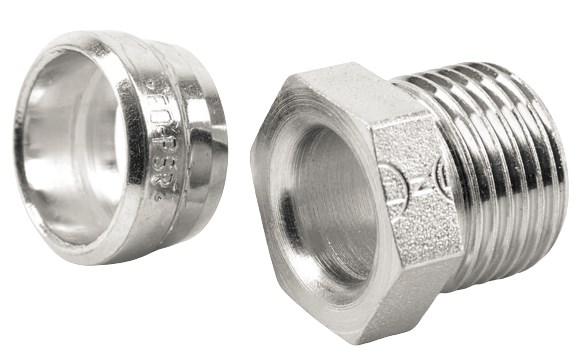
Download and print our wall chart of Ermeto fittings.
Download now (Danish only)

Maintenance
- Periodic visual inspection for corrosion and leakage
- Check the tightening after exposure to vibration
- Replace worn or damaged seals
Buy Ermeto DIN fittings and valves
Frequently asked questions (FQA)
Which sizes are available? Metric sizes to DIN 2353/ISO 8434, typically from small to large tube diameters. Choose according to tube OD and pressure requirements.
Can I mix L and S? No. Use the same series (L/S/LL) across all components in the connection in question.
Which material should I choose? Choose steel for standard hydraulics and stainless steel in corrosive environments or where hygiene requirements are high.
How do I avoid assembly errors? Proper tube preparation, correct insertion to the bottom, correct tightening and the use of EO-2 all help minimise errors.


