

 Danish

Updated: 20 august 2026
Published: 24 May 2019
Thermoplastic hoses: A robust solution for high pressure and extreme temperatures
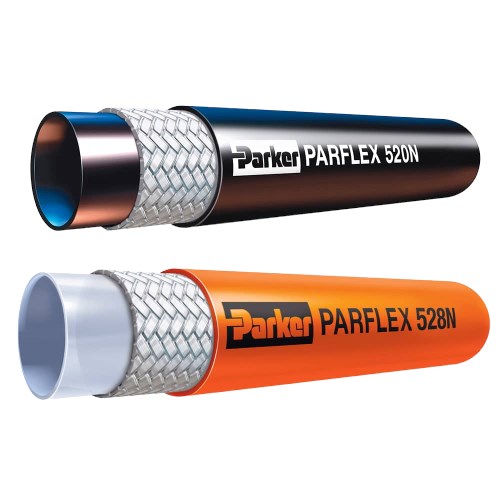
Thermoplastic hoses are a safe and reliable choice when the demands include high pressure, extreme temperature tolerance, high abrasion resistance and low weight. At Hymatik, we supply thermoplastic hoses from Parker Hannifin – developed with a focus on safety, cleanliness and long service life in demanding environments.
What is a thermoplastic hose?
A thermoplastic hose is built up in layers of thermoplastic materials and is often fibre-reinforced. The hoses are chemically inert towards many media, do not interact with the contents and contribute to cleaner systems.
Benefits of thermoplastic hoses
- Wide temperature tolerance: approx. -50 °C to +230 °C (depending on model)
- High-pressure solutions: up to approx. 4000 bar (model-dependent)
- Abrasion-resistant and resistant to UV, ozone and salt water
- Lightweight with a compact outer diameter – ideal where space is limited
- Improved internal cleanliness – reduces the build-up of contaminants and protects filters, valves and hydraulic components
- Lengths up to approx. 4200 m and inner diameters right down to below 2 mm (depending on series)
- Manufactured to Parker Hannifin's high technical standards
Where are thermoplastic hoses used?
Thermoplastic hoses are well suited to dynamic applications where rubber hoses typically wear out quickly:
- Mobile and stationary hydraulics with repeated bending and vibration
- Offshore and marine environments with UV/ozone/salt water
- Industrial automation, testing and pressure testing as well as micro-hydraulics
- Environments with aggressive chemicals, where chemical inertness is required
Tip: Many thermoplastic hoses are available as alternatives to traditional hydraulic standards. Always choose according to the specific specification and manufacturer data.
Guide: how to choose the right hose (STAMP)
- Size: inner/outer diameter, weight and connections
- Temperature: check the continuous and maximum operating temperature
- Application: check the environment in the application: UV, ozone, salt water, chemicals, abrasion and impact, as well as flexibility requirements including bend radius and dynamic cycles
- Media: choose the hose and inner materials according to compatibility
- Pressure: match the working pressure with an appropriate safety factor
Need help choosing the right hose? Call us on 63 12 83 00.
Installation and maintenance
- Observe the minimum bend radius to avoid premature damage
- Avoid twisting and tension during installation; use the correct hose clamps and routing
- Flush and blow clean before commissioning to minimise particles
- Inspection: look for wear, flattening, leaks and coupling damage
- Replace according to the manufacturer's recommendations or at signs of ageing
FAQ: Quick answers
- What temperatures can a thermoplastic hose withstand? As a rule, approx. -50 °C to +230 °C, depending on the model.
- How high a pressure can they handle? Up to approx. 4000 bar for selected series.
- Are they better than rubber hoses? In dynamic environments they often have a longer service life thanks to fibre reinforcement, low weight and high abrasion resistance.
- What about chemicals? The hoses are chemically inert and resist most acids and bases. Always check compatibility with your medium.
- Can they be used in small installations? Yes – with a small bend radius and low weight they are well suited where space is limited.


